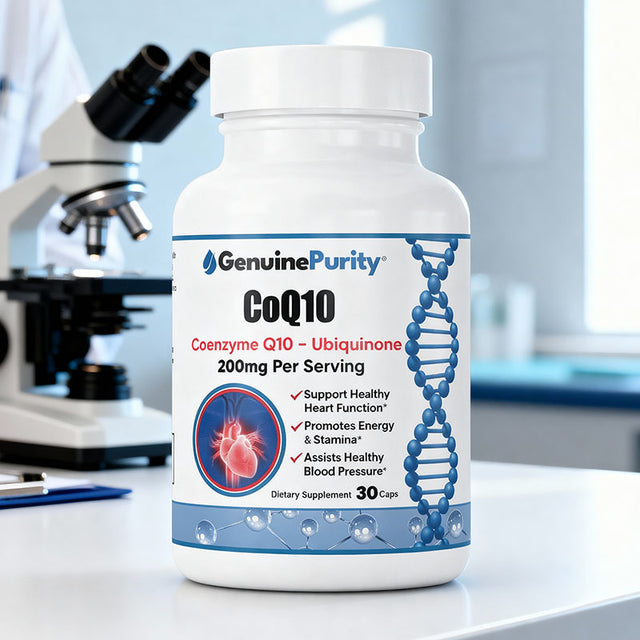
Coenzyme Q10 (CoQ10) has become a staple in the supplement market for its role in cellular energy production and antioxidant protection. With a growing number of formulations, ranging from traditional oil-based capsules to cutting-edge liposomal delivery systems, consumers often wonder which brand offers the best balance of bioavailability, purity, and value. This article compares the leading CoQ10 supplement brands, focusing on the advantages of liposomal CoQ10 while also examining other reputable options. By understanding the science behind each format and the quality standards applied by manufacturers, readers can make an informed decision that aligns with their health goals.
Understanding CoQ10: Ubiquinone vs. Ubiquinol
CoQ10 exists in two primary forms:
- Ubiquinone – the oxidized version, commonly found in most supplements.
- Ubiquinol – the reduced, active antioxidant form that the body can use directly.
Both forms are effective, but ubiquinol may be preferable for individuals over 40 or those with compromised conversion efficiency. Many premium brands now offer a blend of the two, aiming to provide immediate antioxidant action (ubiquinol) alongside long-term support (ubiquinone).
Why Delivery Matters: The Liposomal Advantage
Liposomal technology encapsulates CoQ10 molecules within phospholipid vesicles, protecting the nutrient from stomach acid and enhancing absorption through the intestinal wall. Research suggests liposomal delivery can increase bioavailability by up to 3-4 times compared to standard oil-based capsules.
Key Benefits of Liposomal CoQ10
- Higher absorption rate – phospholipid membranes mimic cell membranes, facilitating easier transport.
- Reduced gastrointestinal discomfort – the protective layer minimizes irritation.
- Smaller dosage required – greater efficiency means fewer capsules per day.
For a detailed look at a high-quality liposomal product, Discover expert strategies here.
Top CoQ10 Brands Compared
1. Genuine Purity – Liposomal CoQ10
This brand utilizes a patented liposomal encapsulation process that delivers both ubiquinone and ubiquinol in a single softgel. The formula is free from artificial colors, preservatives, and common allergens.
- Bioavailability: Approximately 3-4?? higher than conventional capsules.
- Dosage: 150″?mg of total CoQ10 per softgel.
- Testing: Third-party labs confirm purity > 99%.
For more information, Learn about our tailored solutions.
2. Brand X – Standard Oil-Based Softgels
Brand X offers a traditional oil-based CoQ10 supplement sourced from fermented yeast. While the product is affordable and widely available, its absorption relies heavily on the presence of dietary fat.
- Bioavailability: Baseline (reference standard).
- Dosage: 100″?mg per capsule.
- Testing: GMP-certified facility, but limited third-party verification.
3. Brand Y – Ubiquinol-Only Capsules
Targeted at older adults, Brand Y provides pure ubiquinol in a gelatin capsule. The product is well-absorbed but can be more expensive per milligram of active CoQ10.
- Bioavailability: Higher than ubiquinone alone, but lower than liposomal blends.
- Dosage: 200″?mg per capsule.
- Testing: Independent lab results posted on the manufacturer’s website.
4. Brand Z – Powder Form (Water-Soluble)
Brand Z markets a water-soluble CoQ10 powder designed for mixing into smoothies. The formulation uses cyclodextrin complexes to improve solubility.
- Bioavailability: Moderate; depends on mixing consistency.
- Dosage: 50″?mg per serving.
- Testing: Certified organic, but stability over time can be a concern.
Evaluating Quality: What to Look For
When comparing brands, consider the following criteria to ensure you select a product that delivers both safety and efficacy:
- Third-party testing – Look for certificates of analysis (COA) from reputable labs.
- Ingredient sourcing – Fermentation-derived CoQ10 typically offers higher purity than synthetic sources.
- Formulation type – Liposomal, ubiquinol, or oil-based; each has distinct absorption profiles.
- Dosage consistency – Verify that each serving contains the labeled amount of CoQ10.
- Allergen information – Ensure the product is free from gluten, dairy, or soy if sensitivities exist.
For a deeper dive into quality standards, Explore advanced guides and tips.
Choosing the Right Product for Your Lifestyle
Individual needs vary based on age, diet, and health objectives. Below is a quick decision matrix to help match a supplement type to common scenarios:
| Scenario | Recommended Form | Why |
|---|---|---|
| Busy professional seeking maximum absorption with minimal pills | Liposomal CoQ10 (e.g., Genuine Purity) | High bioavailability reduces dosage frequency. |
| Budget-conscious consumer on a regular diet | Standard oil-based softgels | Cost-effective; works well when taken with meals. |
| Older adult with reduced conversion efficiency | Ubiquinol-only capsules | Directly provides the active antioxidant form. |
| Fitness enthusiast who mixes supplements into shakes | Water-soluble powder | Convenient for on-the-go consumption. |
Final Thoughts
Choosing the best CoQ10 supplement hinges on understanding how delivery methods affect absorption, the importance of third-party verification, and personal lifestyle factors. Liposomal CoQ10 stands out for its superior bioavailability and user-friendly dosing, making it a strong candidate for those who prioritize efficiency. Nevertheless, traditional oil-based, ubiquinol-only, and powder formulations each serve niche needs and can be appropriate when matched correctly.
For readers ready to explore a clinically supported liposomal option, Find out more about this approach. By aligning supplement choice with scientific evidence and individual requirements, optimal cellular energy and antioxidant protection become attainable goals.